What Makes Laser Engraving Different From Printing or Stamping
They all put a design on an object, but the results and the durability are nothing alike. Here's the actual difference.
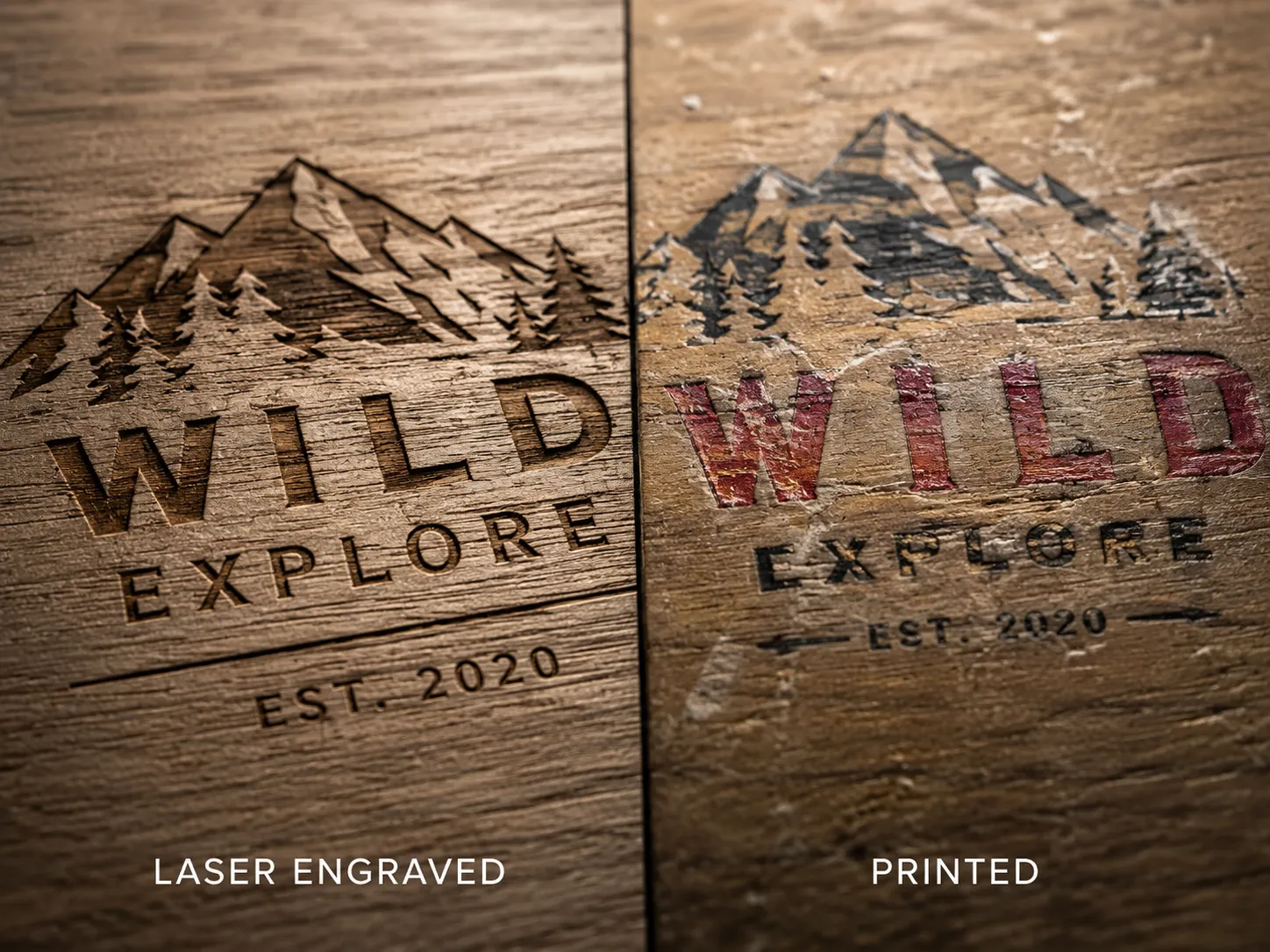
Printing, stamping, and laser engraving all end up putting a design onto a surface, but the way they get there, and how long the result actually lasts, are completely different.
Printing sits on top of the material
Printed designs, whether it's UV printing, screen printing, or a sticker-based process, apply ink or another substance on top of the surface. It can look great initially, but it's vulnerable to scratching, fading, and wearing off with regular use or exposure to sunlight and moisture.
Stamping physically deforms the material
Stamping presses a design into a surface using force, which works well on soft metals but has real limitations on wood, leather, and harder materials. It also can't achieve the same level of fine detail that engraving can, since it relies on a physical die pressed into the surface.
How does laser engraving actually work?
A laser removes or alters the surface of the material itself, burning into wood, vaporizing a thin layer of coated metal, or altering the surface of materials like glass or acrylic. Because the design becomes part of the material rather than sitting on top of it, it holds up to handling, washing, and time in a way printed or stamped designs generally don't.
Why does this matter for something like a wallet or knife?
Items that get handled daily, wallets, knives, water bottles, take the most wear. A printed design on a wallet will likely fade or peel within months of regular use. An engraved design on the same wallet stays intact because there's nothing sitting on the surface to wear away.
Is engraving always the better choice?
Not universally. Full-color designs are still better suited to printing, since engraving is generally limited to the natural color contrast created by the process itself (a burn mark on wood, for example) rather than full color reproduction. For anything that needs to survive daily handling and doesn't require full color, though, engraving tends to hold up better long term.
If you're deciding between engraving and another method for a specific project, tell us what you have in mind and we can walk you through which approach actually fits.