Prototyping With 3D Printing: What Inventors and Small Businesses Should Know
Before you pay for tooling, you can hold the idea in your hand. Here's how 3D printing helps and where it doesn't.
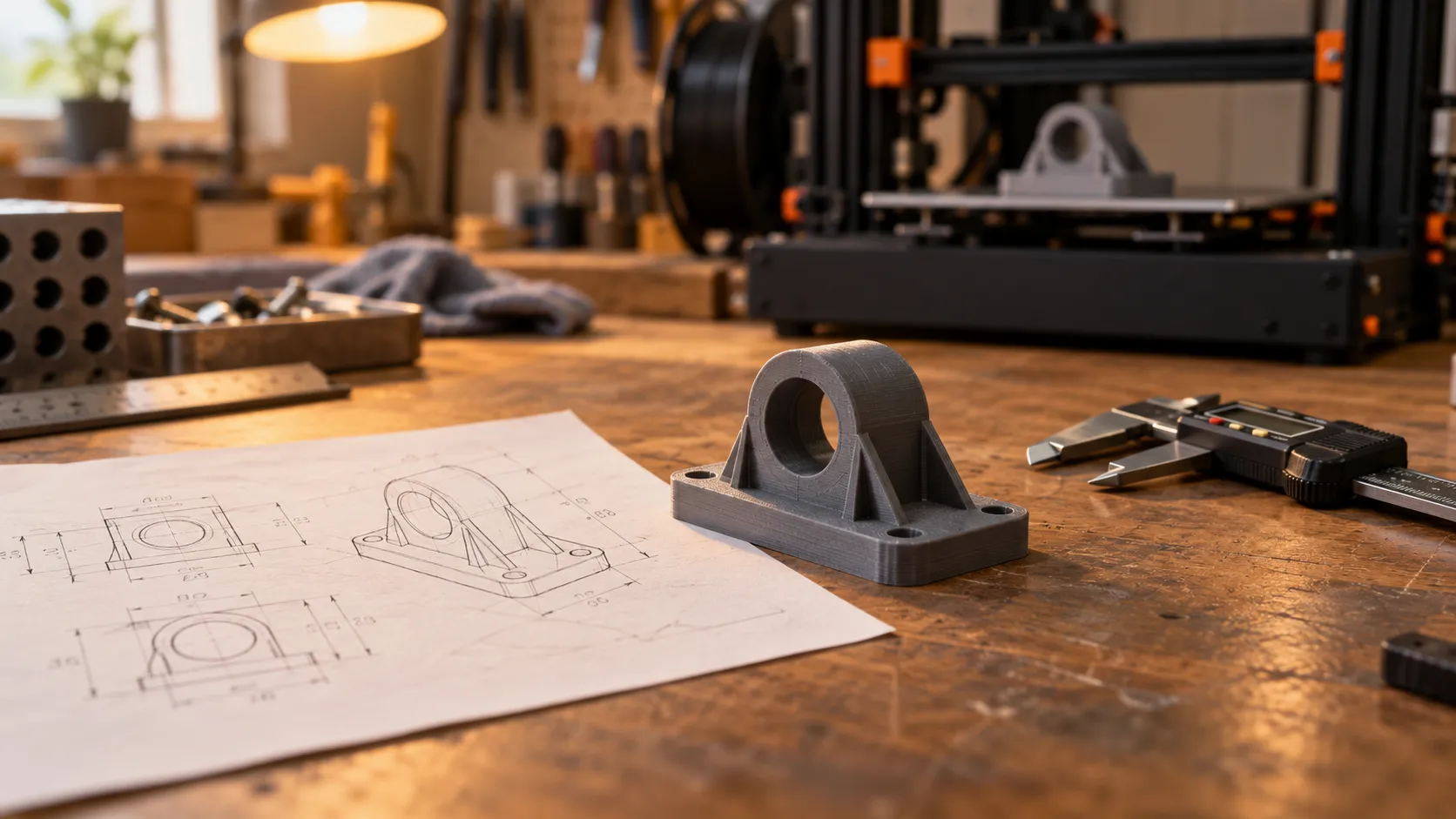
If you've got an idea for a product, a part, or a tool, there's a point where drawings stop being useful and you need to hold the thing. That's what a prototype is for. 3D printing makes it faster and cheaper than most people expect, and it lets you find the problems before you spend serious money.
What a prototype is for
A prototype answers questions. Does it fit in your hand? Does the lid close? Is the handle in the right place? You can learn a lot from a plastic version that costs a fraction of a finished product. Most of the surprises show up the first time someone actually picks it up.
What do I need to send you for a prototype?
Less than you might think. A sketch with measurements is a start. A photo of a similar item helps. If you already have a 3D file, like an STL, that's even better. You don't have to be a designer. Tell us what the thing does, how big it is, and what it has to fit, and we'll go from there.
What does 3D printing do well?
It's good at checking shape, size, and fit. It's also good for one-off parts, custom holders, brackets, and covers, and for trying several versions without much cost. Changing a design is as easy as changing a file.
When is a 3D printed part not the right answer?
If you need hundreds or thousands of identical parts, a different process like injection molding will usually be cheaper per piece. If the part has to carry a lot of load, handle high heat, or touch food, printed plastic may not be the right material. We'll tell you if we think your idea needs something else.
How many revisions should you expect?
Most prototypes take a few rounds. The first one usually shows a problem, the second fixes it, and the third is close. That's normal, and it's the whole point of making a prototype.
What about privacy?
If your idea is sensitive, tell us up front, and we'll talk about how we handle it before you send anything.
If you've got an idea you want to hold in your hand, send us a sketch or a description and we'll let you know what we think.