Vector vs. Raster Artwork: What Actually Happens to Your File Before It Gets Engraved
A simple explanation of vector and raster files, why it matters for laser engraving, and what to send us so your design comes out clean.
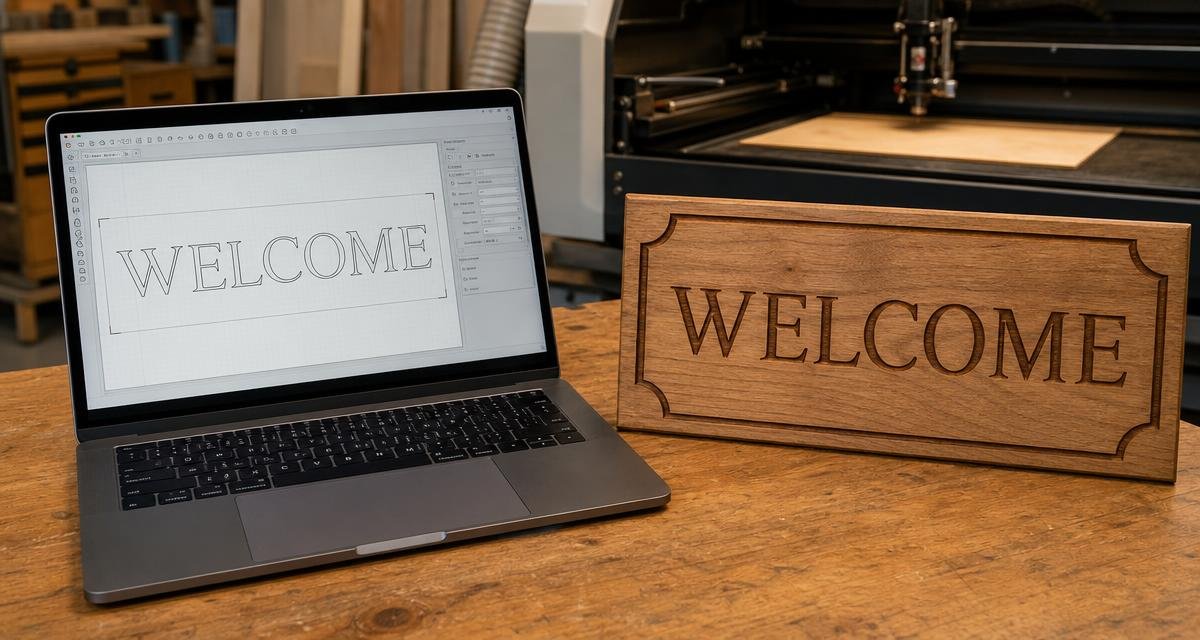
You don't need to know design software to order from us. But if you've ever wondered why we ask for a certain file type, or why a logo you pulled off a website looked rough once it got engraved, this is why.
Raster Files: Made of Pixels
A raster file, like a JPG or PNG, is made up of a grid of tiny colored squares called pixels. Photos are always raster files. Zoom in far enough on any raster image and you'll start to see the individual squares, and the edges get blocky.
That's fine for a photo, since engraving a photo already involves converting it into light and dark areas. But for a logo, a name, or a simple graphic, a low-resolution raster file can turn crisp lines into a stair-step mess once it's enlarged for engraving.
Vector Files: Made of Math
A vector file, like an AI, EPS, SVG, or PDF built from vector artwork, isn't made of pixels at all. It's made of points and paths, basically instructions the computer follows to draw a shape. That means it can be scaled up to any size, tiny or huge, and the edges stay perfectly smooth.
This is why we almost always ask for a vector file when it comes to logos, monograms, and text-heavy designs. It guarantees the edges stay sharp no matter what size the final piece ends up being.
How to Tell What You Have
If your file ends in .jpg, .png, or .heic, it's raster. If it ends in .ai, .eps, .svg, or was made in a program like Illustrator or Canva and exported as vector, it's probably a vector file.
A quick trick: open the image and zoom in as far as it will go. If the edges start looking jagged or blurry, it's raster. If the lines stay perfectly sharp no matter how far you zoom, it's vector.
What If You Only Have a Raster Logo?
This happens all the time, and it's not a dealbreaker. If the file is high enough resolution, or the design is simple, we can often trace it into a clean vector ourselves before engraving. What doesn't work well is a small, blurry logo pulled from a website or a screenshot of one, since there's no detail left to trace.
If you have access to a business's original logo files, or a marketing team that can send one, that's always the better route.
For Personal Projects, Don't Overthink It
None of this means you need design software to order a personalized gift. Names, dates, and simple phrases are typed directly into the design, no file needed. This mostly matters when you're bringing in an existing logo, monogram, or piece of custom artwork.